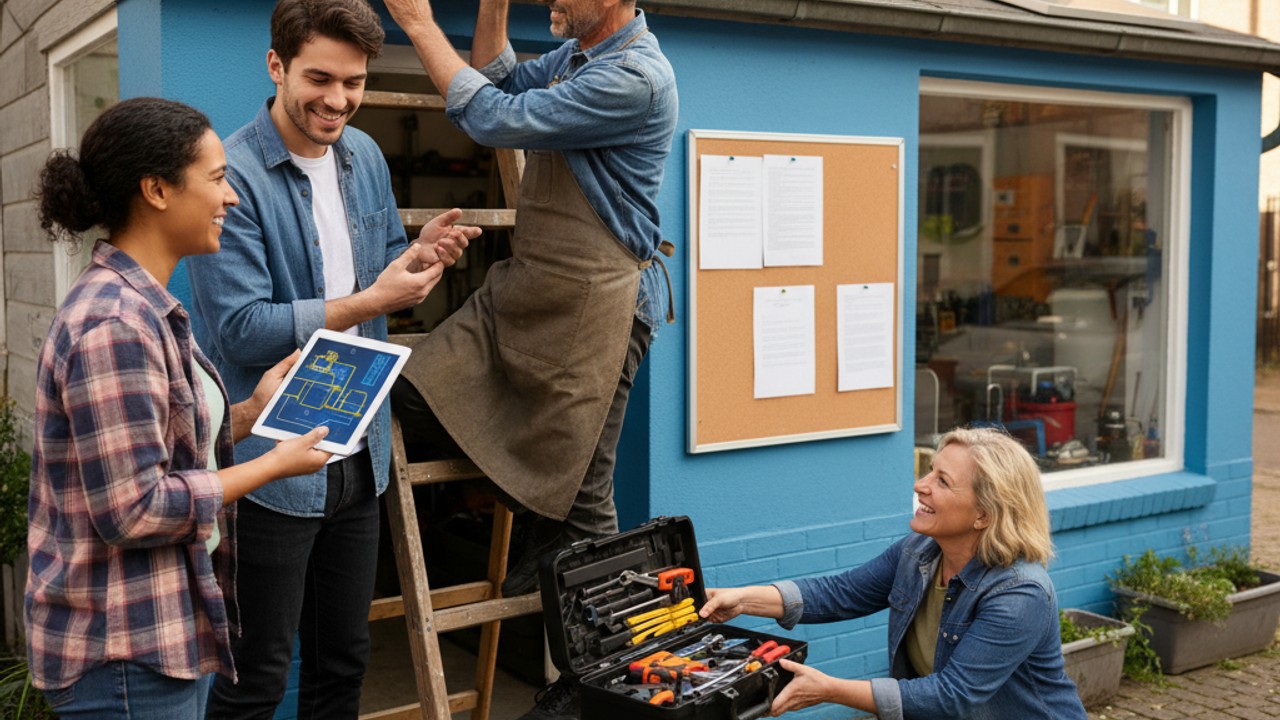
When the rains came early last year, Luis stood on the doorstep of his tiny repair shop and watched his livelihood float away. He is one of millions whose income is fragile — and whose future depends on coordinated action across finance, environment, youth opportunity, and community care.
That one image connects causes too often treated separately: a warming climate that erodes livelihoods, limited access to capital that prevents recovery, and a generation of young people who need skills and community networks to rebuild stronger.
Why this moment matters
We are at a crossroads. The IPCC's 2023 synthesis is blunt:
It is unequivocal that human influence has warmed the atmosphere, ocean and land.Read the IPCC Synthesis Report (2023). Climate shocks already push people back into poverty; the World Bank has warned that climate impacts could force tens of millions into poverty without adaptation and finance (World Bank analysis).
There are practical pathways forward. The renewable energy transition is creating jobs: IRENA reported roughly 12.7 million jobs in renewables in 2022, offering opportunities for youth employment and local enterprise (IRENA annual review).
Real solutions, real people
Nonprofits and community groups are building these bridges. GiveDirectly has generated strong evidence that direct cash transfers raise financial stability and resilience for families, allowing recipients to invest in businesses, housing, and education. Conservation organizations such as The Nature Conservancy work at the intersection of environmental protection and community livelihoods, restoring ecosystems while creating green jobs. Local groups like Habitat for Humanity combine housing, volunteering, and skills training to stabilize families and neighborhoods.
What you can do today
Small steps add up. Here are practical actions that move hope into impact:
- Support proven programs: donate to organizations that use evidence-based approaches (for research, see GiveDirectly research).
- Volunteer locally: help a youth job program, a community clean-up, or build with a housing nonprofit to strengthen local resilience.
- Advocate for policy: ask leaders to fund climate adaptation, social protection, and youth employment programs that create long-term stability.
- Invest sustainably: prioritize green jobs, microfinance, and community-led enterprises that combine economic opportunity with conservation.
Change is not a single donation or speech — it is the steady joining of hands across causes.
Luis rebuilt his shop by joining a community apprenticeship that taught solar repair, received a small grant from a neighborhood fund, and traded services with neighbors to stabilize cash flow. That combination of financial support, youth skills training, environmental focus, and community service is replicable.
If you feel moved, start with one thing today: support a local youth program, donate to an evidence-based nonprofit, or show up to a community service day. Small, coordinated acts plant seeds. Together, they can grow resilient neighborhoods where storms no longer mean starting over.