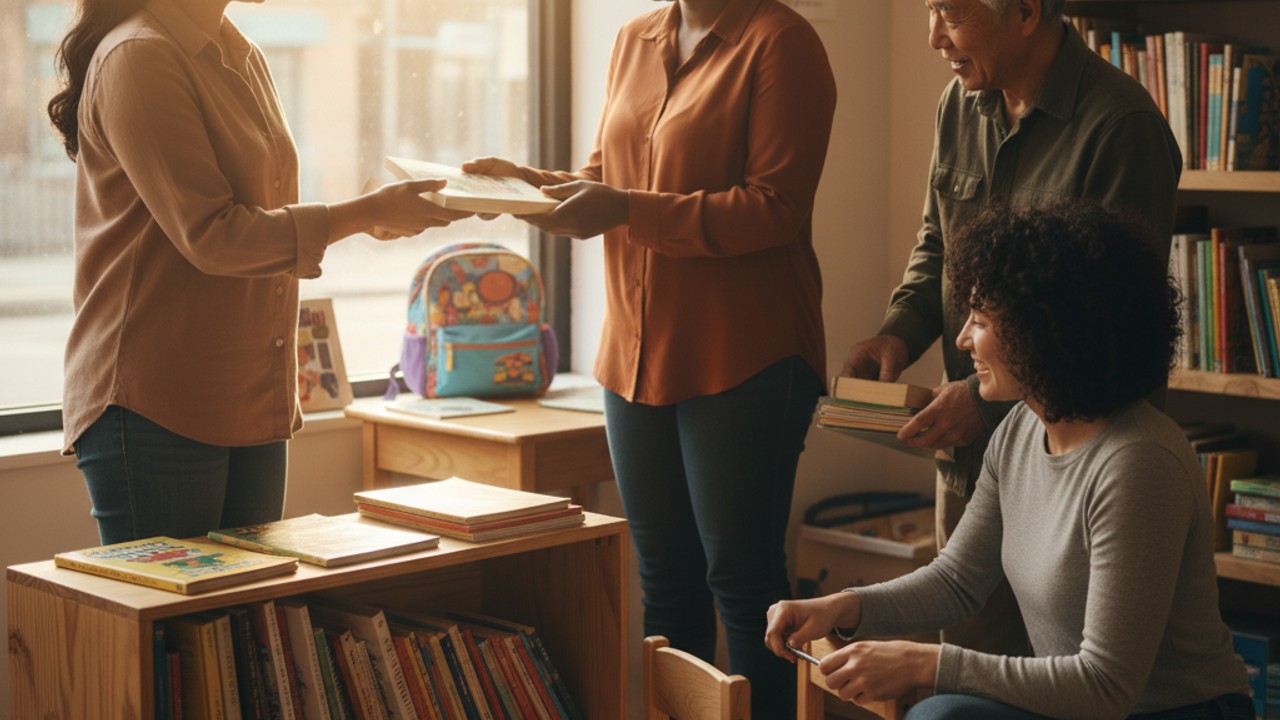
When the rains washed away her classroom roof, ten-year-old Maya did not stop asking questions; a neighbor turned a shop into a study corner and a community volunteer brought books. That small act — a lamp, a book, a patient listener — became the difference between falling behind and finding a path forward.
Why this matters now
Learning and resilience are under strain worldwide. The World Bank warns that learning poverty — the share of 10-year-olds unable to read and understand a simple text — remains unacceptably high and worsened after pandemic school closures. The World Bank explains how lost instruction has long-term economic and health consequences (World Bank: Learning Poverty). At the same time, the World Health Organization's World Mental Health Report highlights a global rise in mental health needs among children and adolescents, linking stress, disruption, and loss of routine to lifelong outcomes (WHO World Mental Health Report). UNESCO documents that school disruptions affected hundreds of millions of learners and deepened inequality in access to education (UNESCO: Education Response). These are not abstract problems; they are urgent threats to a child's future.
Where creativity and community change the equation
Across continents, organizations and ordinary citizens are proving that creative learning and community support restore hope. Room to Read focuses on literacy and girls' education by delivering locally relevant books and community reading programs (Room to Read). Save the Children runs mental health and education recovery programs after emergencies, helping children regain normalcy and learning (Save the Children). For families rebuilding economic stability, microfinance platforms like Kiva connect entrepreneurs to small loans that fund livelihoods and resilience (Kiva). These organizations show how learning, health, and financial stability intersect: when a child can read, a parent can manage income better, and the whole community grows stronger.
"There can be no health without mental health." — World Health Organization
Simple actions that build resilience
If you want to be part of the solution, here are concrete steps that work:
- Support street-level learning: Donate books, time, or funds to organizations like Room to Read or local community schools (donate).
- Prioritize mental health: Advocate for child-friendly mental health services in schools and support programs run by Save the Children (programs).
- Back financial resilience: Lend through platforms like Kiva or support local microfinance and savings groups to help families weather shocks (lend).
- Mobilize your workplace: Ask your employer to adopt CSR that funds creative learning hubs, mental health training, or emergency community grants.
We cannot fix every structural problem overnight, but collective, targeted action builds a different future. A donated book can brighten a week; a small loan can seed a business; a trained teacher can restore confidence. These are the building blocks of resilience and hope. Join a program, give what you can, or start a local learning circle — the first act matters. Together, communities can turn moments of crisis into stories of recovery.