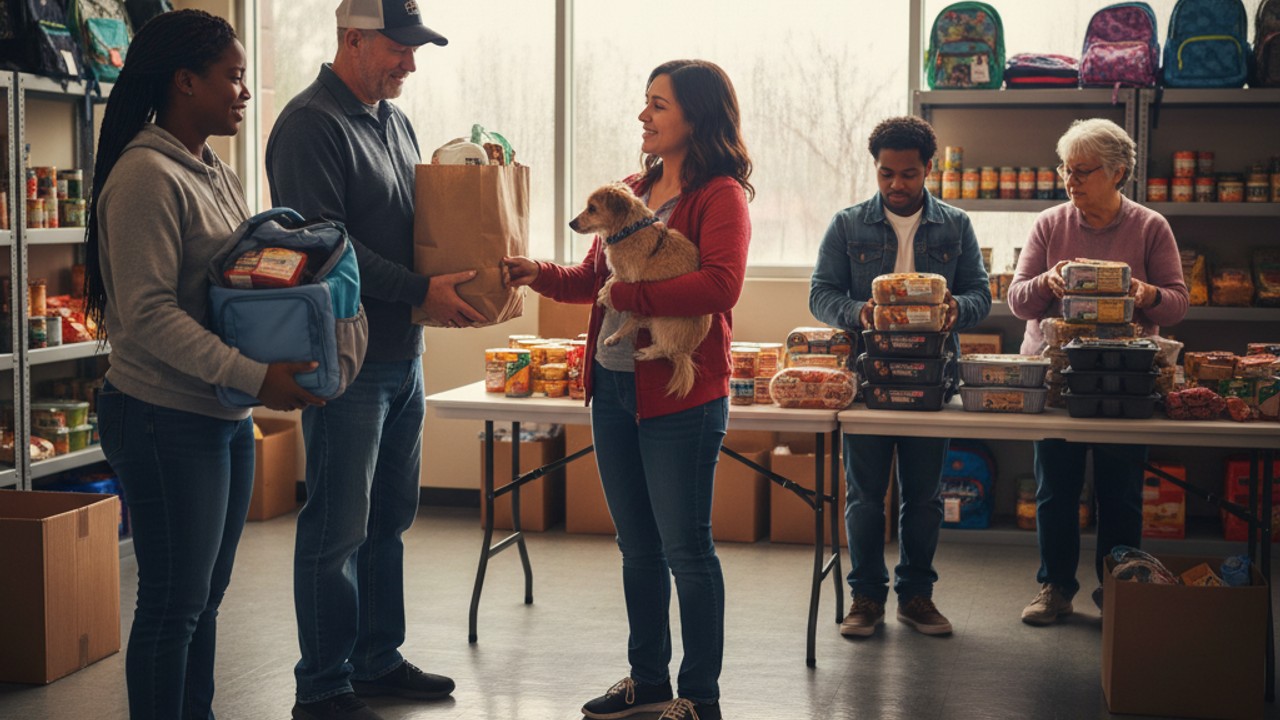
When a local pantry volunteer opened the door one rainy morning last year, she found a backpack on the step: a child's school bag filled with half-eaten food wrapped in a napkin and a note that read, "I was hungry and couldn't wait." That image stays with you. Around the world, hunger and interrupted education are not distant headlines but quiet, urgent crises in communities we all know.
The scale and the surprise
Hunger has risen after years of progress: the UN Food and Agriculture Organization reported that around 735 million people were undernourished in 2022, a reversal with deep consequences for children, families, and learning (FAO SOFI 2023). In the United States, local networks such as Feeding America continue to document food insecurity as millions skip meals or trade study time for work. Education losses follow — children who are hungry learn less, miss school more, and face diminished futures (Save the Children: Education).
People and organizations making change
This is not a tale of helplessness. Nonprofits, neighbors, and small local businesses are filling the gaps. Feeding America partners with food banks and schools to put meals in backpacks and cafeterias. Save the Children runs learning programs in emergency settings so children keep learning when classrooms close. For community rebuilding and safe housing — a root cause of stable school attendance — groups like Habitat for Humanity intervene. And when a family's crisis affects their pets, organizations such as the ASPCA help keep animals safe and families together.
Small actions, big ripple effects
Change is often simple and local. When a school pantry opens, one hungry child can focus, learn, and dream. When a shelter helps a family keep their pet, a child preserves a source of comfort and stability. These everyday interventions add up: they keep plates full, minds learning, and communities resilient.
- Donate to local food banks or trusted nonprofits like Feeding America and Save the Children.
- Volunteer at a school pantry, tutoring program, or animal shelter; your time directly supports kids and families.
- Advocate for policies that support school meals, community food programs, affordable housing, and animal welfare.
- Give thoughtfully—support organizations that work locally and transparently, like Habitat for Humanity and the ASPCA.
You can be part of the solution. The backpack on that rainy morning became a spark: neighbors organized weekend meal packs and the school started a discreet take-home pantry. That child finished the semester. That outcome began with one person choosing to act.
If this moved you, pick one action above today. Share a donation link, sign up to volunteer for a single shift, or start a collection at your workplace or faith community. Small consistency beats occasional heroics. Together we turn empty plates into full classrooms and frightened pets into comfort companions — one neighbor at a time.