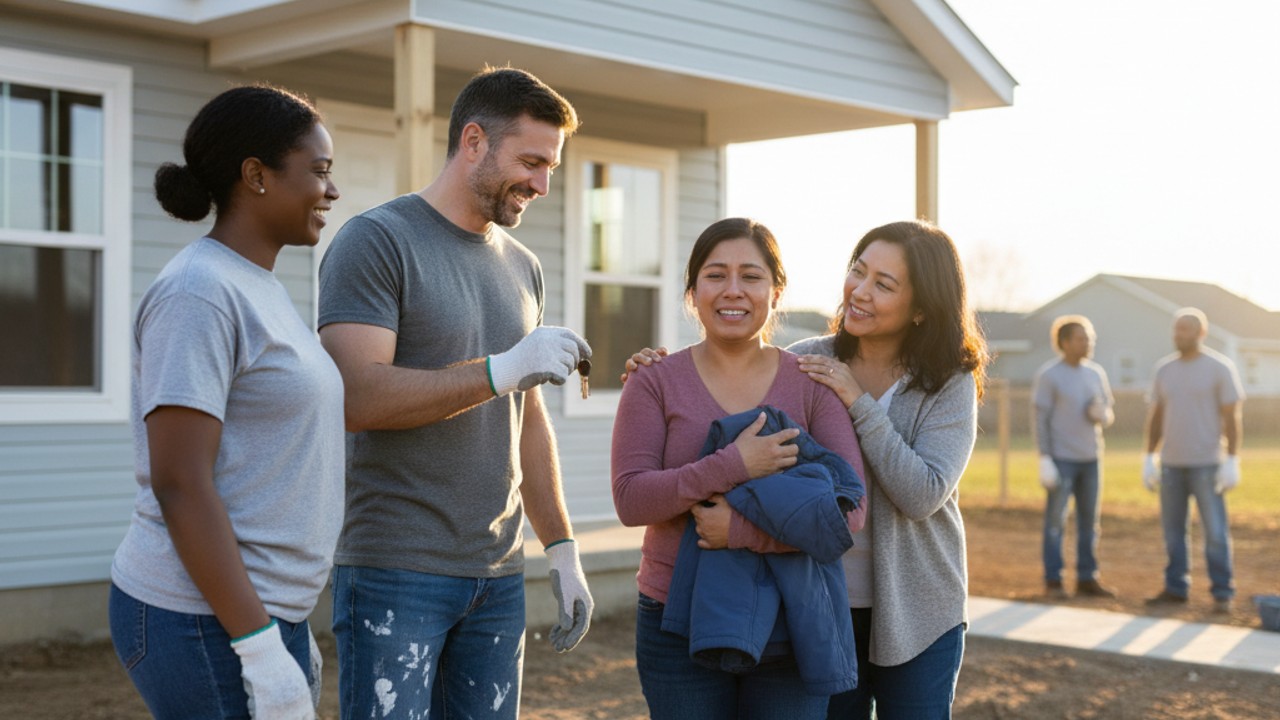
When Maria lost her second job in 2023, she and her two children found themselves bouncing between a cousin's couch and a motel room. One night, after hours on hold with housing agencies, she wrote in her notebook: "We just want a place where my kids can hang their coats." That notebook became a map — to local shelters, to volunteer-run food programs, to a small nonprofit that helped her secure a voucher. Maria's story is personal, but it is not unique.
The scale of the crisis
Millions of families struggle to afford a stable home. The National Low Income Housing Coalition estimates there is a shortage of roughly 7.3 million rental homes affordable and available to extremely low-income renters — people earning 30% or less of area median income — leaving many forced into unstable housing or homelessness. See the full analysis at NLIHC: The Gap.
Housing professionals use a simple but powerful measure: a household is considered cost-burdened if it spends more than 30% of income on housing. When rent eats most of a paycheck, there is nothing left for childcare, medicine, or school supplies. The consequences ripple through neighborhoods and whole communities.
Who is stepping in
Nonprofits, volunteers, community developers, and housing advocates are the human bridge between scarcity and stability. Organizations like Habitat for Humanity mobilize volunteers to build affordable homes and help families achieve long-term ownership. The National Alliance to End Homelessness provides research and policy tools that cities use to scale housing-first solutions. Local community development corporations convert vacant lots into mixed-income housing and supportive services.
"Affordable housing is not just about walls and roofs — it is about dignity and opportunity," says a program manager at a city housing coalition.
How volunteerism and support services matter
Volunteerism can be the multiplier that extends limited funding. From construction crews and after-school tutors to legal clinics and tenant advocates, volunteers increase capacity and human connection. Support services — case management, mental health care, employment counseling — turn a roof into a home that can sustain a family long-term.
Small actions, big impact
You do not need a construction background to help. Here are practical ways to act today:
- Volunteer: Join a build day or mentor program through local chapters of Habitat for Humanity or community development organizations. See opportunities at Habitat volunteer page.
- Support local nonprofits: Donate to organizations providing rental assistance and support services in your city, or donate items and gift cards to shelters.
- Advocate: Contact your local elected officials to support housing trust funds, zoning reforms, and increased funding for supportive services. Resources for policy action can be found at National Alliance to End Homelessness advocacy resources.
- Join coalitions: Many communities have volunteer-led housing committees or tenant unions where your time and voice can make a direct difference.
Stories like Maria's show that compassion, paired with practical solutions, can change lives. When volunteers swing hammers, organizers secure vouchers, and advocates win funding, stability follows. If you want to see a tangible result within months, sign up for a local build day; if you want systemic change, make your voice heard with policymakers.
Hope is not abstract — it is built one home, one service, and one phone call at a time. Find a local organization, volunteer a few hours, or make a small donation. Your action can help someone hang their coat in a place they finally call home.